
Introduction
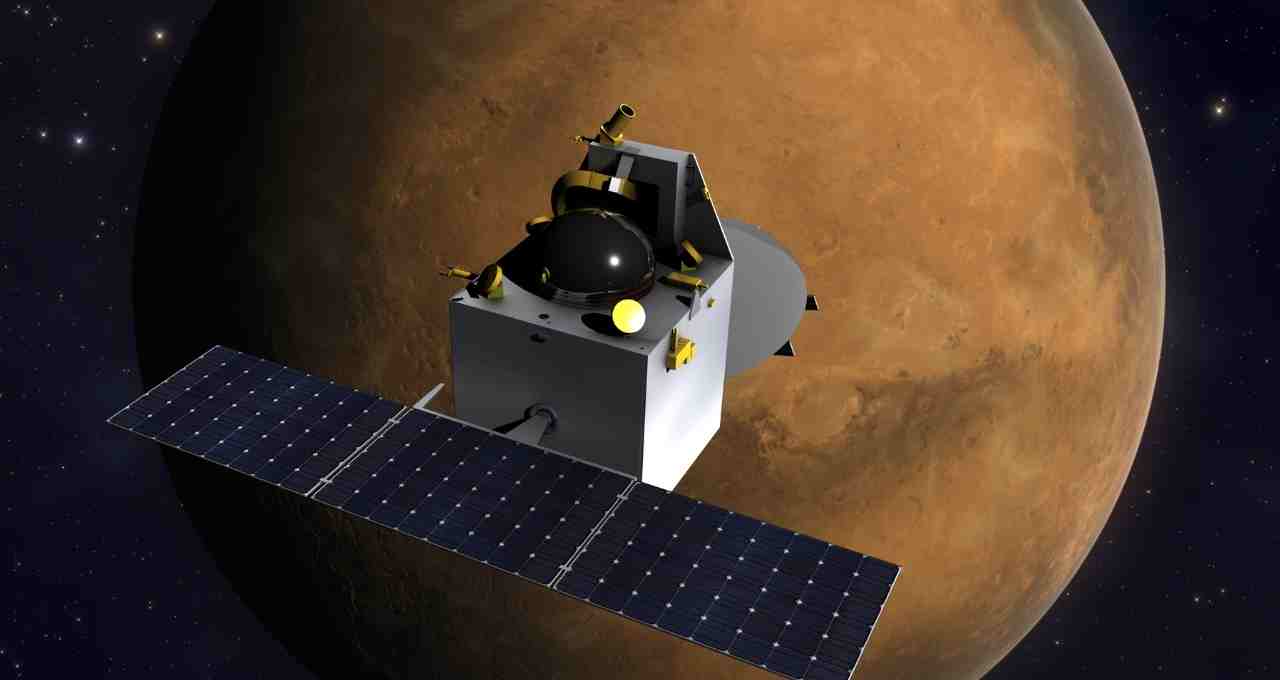
The Mars Orbiter Mission (MOM), also known as Mangalyaan, is India’s first interplanetary mission. It was launched on November 5, 2013, and entered Mars orbit on September 24, 2014. MOM was the first Asian spacecraft to reach Mars orbit, and the first spacecraft to do so on its maiden attempt.
MOM is a technology demonstration mission, but it also carries a suite of five scientific instruments to study the Martian surface and atmosphere. These instruments include:
- Mars Colour Camera (MCC): This camera takes high-resolution images of the Martian surface in visible light.
- Methane Sensor for Mars (MSM): This instrument measures the levels of methane in the Martian atmosphere.
- Mars Exospheric Neutral Composition Analyzer (MENCA): This instrument measures the composition of the Martian exosphere.
- Thermal Infrared Imaging Spectrometer (TIS): This instrument maps the temperature of the Martian surface and atmosphere.
- Lyman Alpha Photometer (LAP): This instrument measures the hydrogen content of the Martian upper atmosphere.
Discoveries
MOM has made several important discoveries since entering Mars orbit. These include:
- The detection of methane in the Martian atmosphere. Methane is a potential biosignature, so its detection on Mars suggests that there may be life on the planet.
- The discovery of water ice in the Martian polar regions. This discovery suggests that Mars may have been more habitable in the past, and it also provides a potential resource for future human exploration.
- The creation of a high-resolution map of the Martian surface in ultraviolet light. This map has helped scientists to identify new features on the Martian surface, such as ancient riverbeds and lakes.
MOM is also providing valuable data on the Martian atmosphere and climate. This data is helping scientists to better understand how the Martian atmosphere has changed over time, and it is also providing insights into the potential for future human exploration of the planet.
Impact
The success of the MOM mission has had a significant impact on India’s space program. It has demonstrated India’s ability to develop and launch complex interplanetary missions. MOM has also inspired a new generation of scientists and engineers in India.
MOM has also had a positive impact on India’s international standing. It has shown the world that India is a serious player in space exploration. MOM has also strengthened India’s ties with other spacefaring nations, such as the United States and Russia.
Conclusion
The MOM mission is a remarkable achievement for India. It is the first Asian mission to reach Mars orbit, and the first mission to do so on its maiden attempt. MOM has made several important discoveries about Mars, and it is continuing to provide valuable data on the Martian surface and atmosphere.
The MOM mission is a testament to India’s growing space capabilities. It is also a source of national pride for India, and it has inspired a new generation of scientists and engineers in the country. MOM has also shown the world that India is a serious player in space exploration.
