
Introduction
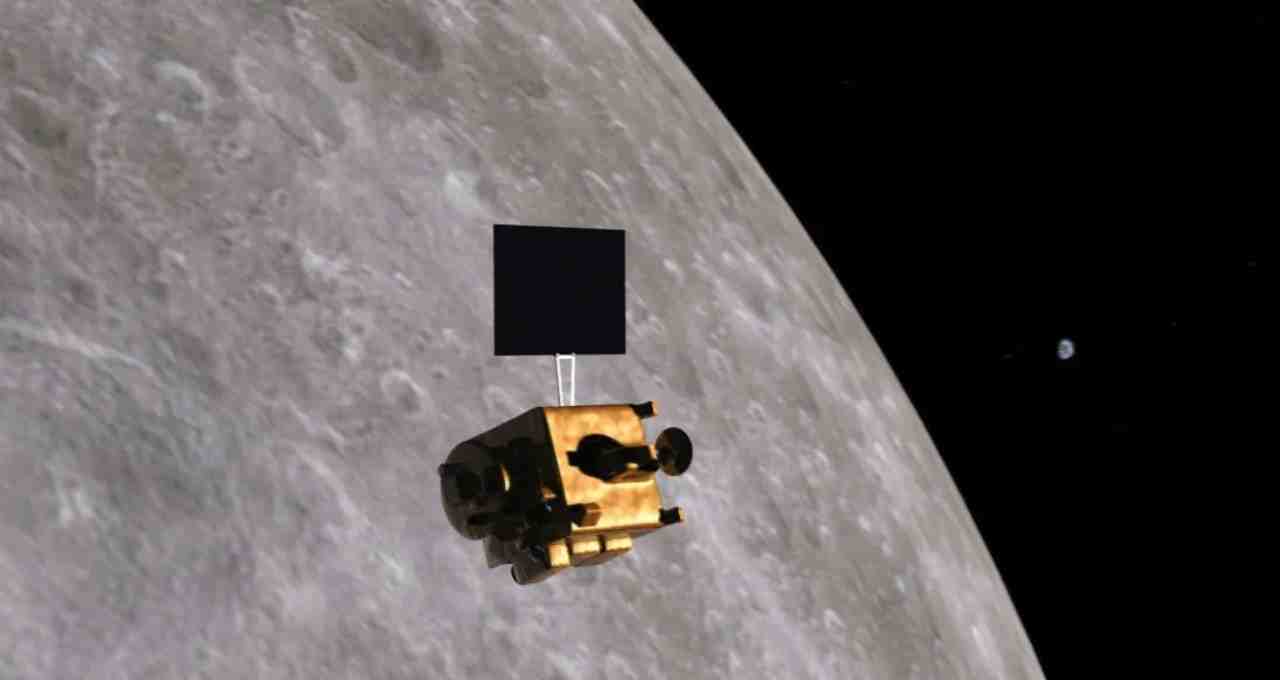
Chandrayaan is a series of lunar space probes developed by the Indian Space Research Organisation (ISRO). The first mission, Chandrayaan-1, was launched in 2008 and made several important discoveries, including the presence of water on the Moon. The second mission, Chandrayaan-2, was launched in 2019 but experienced a soft landing failure on the lunar surface. The third mission, Chandrayaan-3, is scheduled to launch in 2023 and will attempt to land a rover in the Moon’s south polar region.
Chandrayaan-1
Chandrayaan-1 was launched on October 22, 2008, and entered lunar orbit on November 8, 2008. The mission carried a suite of 11 scientific instruments from India, the United States, the United Kingdom, Germany, Sweden, and Bulgaria.
One of the most important discoveries of Chandrayaan-1 was the presence of water molecules on the Moon. This discovery was made using the Moon Mineralogy Mapper (M3) instrument, which was provided by NASA. The M3 instrument detected water molecules in the lunar soil in both the polar and equatorial regions of the Moon.
Chandrayaan-1 also made other important discoveries, including:
- The presence of hydroxyl ions (OH-) on the lunar surface.
- The presence of several minerals that could be used for resource extraction, such as titanium, iron, and aluminum.
- The discovery of several new craters on the lunar surface.
- The creation of a high-resolution map of the Moon in infrared, visible, and X-ray light.
Chandrayaan-1 completed its mission on August 29, 2009, after running out of propellant.
Chandrayaan-2
Chandrayaan-2 was launched on July 22, 2019, and entered lunar orbit on August 20, 2019. The mission carried a lander and a rover. The lander was scheduled to land on the lunar surface on September 7, 2019, but experienced a soft landing failure.
The exact cause of the soft landing failure is still unknown, but ISRO has speculated that it may have been due to a combination of factors, including a loss of communication between the lander and the orbiter, and a problem with the lander’s attitude control system.
Despite the soft landing failure, the Chandrayaan-2 mission was still a success in many ways. The orbiter is still in lunar orbit and is continuing to collect scientific data. The mission also demonstrated India’s ability to develop and launch complex lunar missions.
Chandrayaan-3
Chandrayaan-3 is scheduled to launch in 2023 and will attempt to land a rover in the Moon’s south polar region. The south polar region is of particular interest to scientists because it is thought to contain water ice.
The Chandrayaan-3 rover will be equipped with a suite of scientific instruments to study the lunar soil and atmosphere. The rover will also carry a drill that will be used to collect samples from the lunar surface.
The Chandrayaan-3 mission is expected to provide new insights into the Moon’s composition and history. It will also help scientists to better understand the potential for future human exploration of the Moon.
India’s Lunar Ambitions
India has ambitious plans for future lunar exploration. In addition to Chandrayaan-3, ISRO is also developing a lunar human exploration program. The goal of this program is to land Indian astronauts on the Moon by 2030.
ISRO is also developing a robotic lunar rover that could be used to support future human missions to the Moon. The rover, called the Lunar Polar Exploration Vehicle (LPEV), is designed to operate in the Moon’s harsh polar environment.
India’s lunar exploration program is still in its early stages, but it has made significant progress in recent years. The Chandrayaan missions have demonstrated India’s ability to develop and launch complex lunar missions. The country is now well on its way to becoming a major player in lunar exploration.
Conclusion
India’s Chandrayaan program is a bold and ambitious undertaking. The program has already made several important discoveries, including the presence of water on the Moon. India’s future lunar exploration plans are even more ambitious, with the goal of landing Indian astronauts on the Moon by 2030.
The success of the Chandrayaan program is a testament to India’s growing space capabilities. The program is also a source of national pride for India. The Chandrayaan missions have shown the world that India is a serious player in space exploration.
