
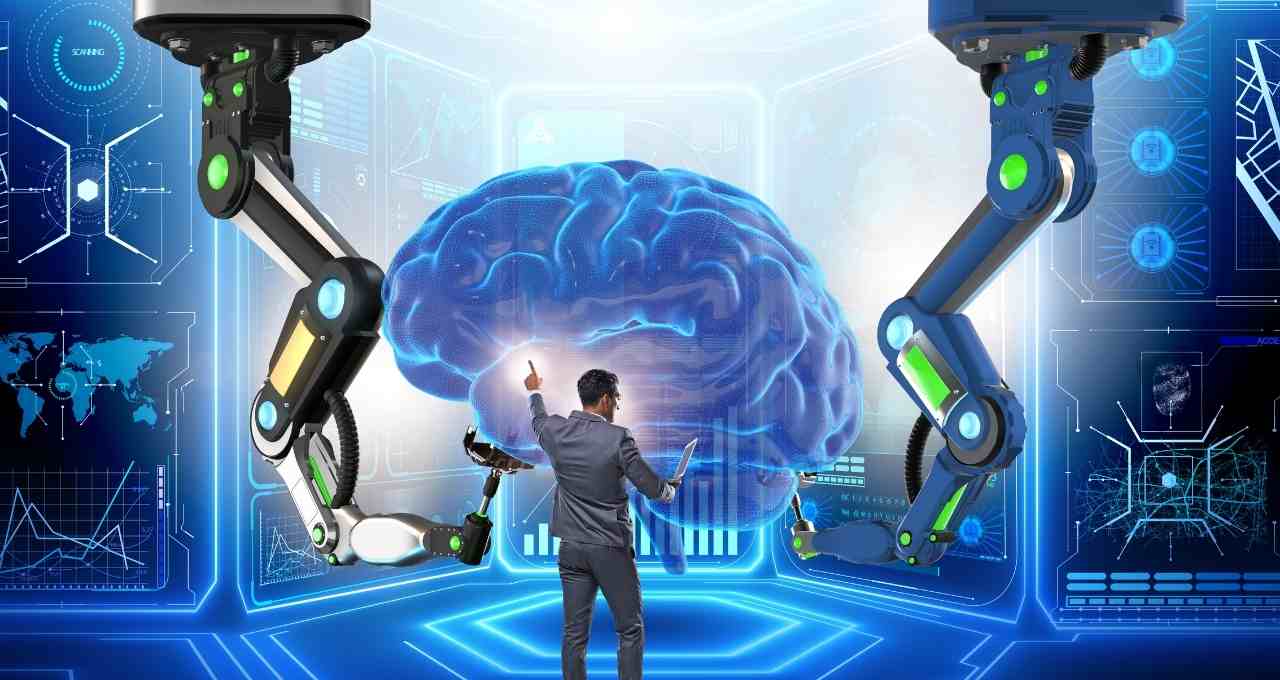
Google Brain is a deep learning research team at Google AI, a division of Google dedicated to artificial intelligence. Google Brain was founded in 2011 by Jeff Dean, Greg Corrado, and Andrew Ng.
Google Brain’s mission is to advance the state of the art in artificial intelligence and to create new AI technologies that can benefit society. The team works on a wide range of AI problems, including computer vision, natural language processing, machine translation, and reinforcement learning.
Google Brain has made significant contributions to the field of artificial intelligence. For example, the team developed the TensorFlow open-source machine learning library, which is now used by researchers and engineers all over the world. Google Brain has also developed state-of-the-art AI systems for tasks such as image classification, object detection, and machine translation.
Google Brain’s impact on the world
Google Brain’s research has had a major impact on the world. Google Brain’s AI technologies are used in a wide range of Google products and services, including Google Search, Google Photos, and Google Translate. Google Brain’s AI technologies are also used by other companies and organizations to develop new products and services.
For example, Google Brain’s AI technologies are used by medical companies to develop new diagnostic tools and treatments. Google Brain’s AI technologies are also used by transportation companies to develop self-driving cars and trucks.
Google Brain’s future
Google Brain is committed to continuing to advance the state of the art in artificial intelligence. The team is working on a number of new AI technologies, including AI systems that can learn to perform complex tasks without being explicitly programmed.
Google Brain is also working on AI systems that can be more explainable and transparent. This is important because it will allow us to better understand how AI systems make decisions and to ensure that they are aligned with our values.
Impact Of Google Brain
- Google Translate: Google Translate uses Google Brain’s AI technologies to translate text between over 100 languages. Google Translate is used by billions of people around the world to communicate with each other.
- Google Photos: Google Photos uses Google Brain’s AI technologies to organize your photos and videos, and to create new photos and videos, such as GIFs and collages. Google Photos is used by over 1 billion people around the world.
- Google Search: Google Search uses Google Brain’s AI technologies to understand your search queries and to provide you with the most relevant results. Google Search is used by billions of people around the world to find information on the web.
- Self-driving cars: Google Brain is developing AI technologies for self-driving cars. Self-driving cars have the potential to revolutionize transportation and to make roads safer.
- Medical diagnosis: Google Brain is developing AI technologies for medical diagnosis. AI systems can be trained to identify diseases and conditions in medical images, such as X-rays and MRI scans. This can help doctors to diagnose diseases more accurately and more quickly.
- Drug discovery: Google Brain is developing AI technologies for drug discovery. AI systems can be used to screen millions of potential drug compounds to identify those that are most likely to be effective against a particular disease. This can help to speed up the development of new drugs.
Google Brain’s commitment to ethics and responsibility
Google Brain is committed to developing AI technologies that are used for good. The team has developed a set of AI principles that guide its research. These principles include:
- Social benefits: AI should benefit all of humanity, and should not be used to harm or exploit people.
- Accountability: AI systems should be accountable to people, and should be used in a way that is transparent and ethical.
- Safety: AI systems should be safe and reliable, and should not pose a risk to people or the environment.
- Fairness: AI systems should be fair and unbiased, and should not be used to discriminate against or disadvantage people.
- Privacy: AI systems should respect people’s privacy, and should not be used to collect or use personal data without people’s consent.
Google Brain is also committed to working with other stakeholders to develop ethical and responsible AI guidelines. The team is a member of the Partnership on AI, a coalition of companies, universities, and non-profit organizations that are working to ensure that AI is developed and used responsibly.
Conclusion
Google Brain is a leading research team in the field of artificial intelligence. The team has made significant contributions to the field and has developed AI technologies that are used in a wide range of products and services. Google Brain is committed to continuing to advance the state of the art in artificial intelligence and to creating new AI technologies that can benefit society.
