
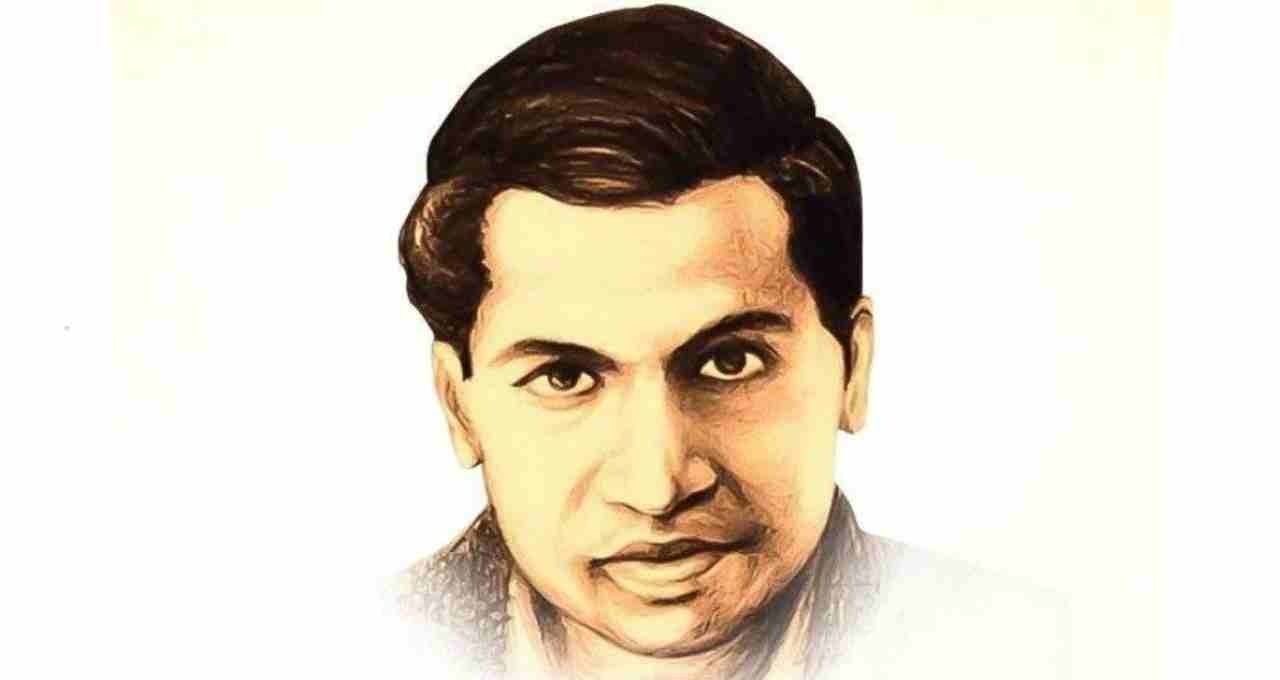
Srinivasa Ramanujan was a self-taught Indian mathematician who made significant contributions to number theory, analysis, infinite series, continued fractions, and mathematical analysis. He was born in Erode, India, in 1887, and died in Kumbakonam, India, in 1920, at the age of 32.
Here are six interesting facts about Srinivasa Ramanujan:
He was a self-taught mathematician.
Ramanujan had very little formal training in mathematics. He was mostly self-taught, using books and other resources from the local library.
He was a genius.
Ramanujan’s mathematical abilities were extraordinary. He was able to solve complex mathematical problems that had stumped other mathematicians for years.
He made significant contributions to number theory.
Ramanujan made many important contributions to number theory, including the Ramanujan prime, the Ramanujan theta function, and the Ramanujan conjecture.
He was a fellow of the Royal Society.
In 1918, Ramanujan was elected as a fellow of the Royal Society, one of the most prestigious scientific societies in the world. He was the first Indian to be elected as a fellow of the Royal Society.
He was a devout Hindu.
Ramanujan was a devout Hindu and his religious beliefs influenced his work in mathematics. He believed that mathematics was a way to connect with God.
He died at a young age.
Ramanujan died at the young age of 32 from complications of tuberculosis. Despite his short life, he made significant contributions to mathematics that continue to be studied and used today.
Ramanujan’s Life and Work
Ramanujan was born on December 22, 1887, in Erode, India. He came from a poor family, but he was able to attend college with the help of a scholarship. However, he was unable to complete his degree due to financial difficulties.
In 1912, Ramanujan wrote a letter to G.H. Hardy, a British mathematician, seeking his help in getting his work published. Hardy was impressed by Ramanujan’s work and invited him to come to England. Ramanujan arrived in England in 1914 and began working with Hardy at Cambridge University.
Ramanujan’s time at Cambridge was very productive. He published many papers in leading mathematical journals and made significant contributions to number theory. However, he was also very homesick and he returned to India in 1919.
Ramanujan continued to work on mathematics in India, but his health was declining. He died on April 26, 1920, at the age of 32.
Ramanujan’s Legacy
Ramanujan’s work has had a major impact on mathematics. His discoveries have been used to solve many important mathematical problems. Ramanujan is considered to be one of the greatest mathematicians of all time.
Ramanujan’s legacy is not just limited to his work in mathematics. He is also an inspiration to people all over the world. He showed that it is possible to achieve great things even if you come from a humble background.
Conclusion
Srinivasa Ramanujan was a self-taught Indian mathematician who made significant contributions to number theory, analysis, infinite series, continued fractions, and mathematical analysis. He was a genius who died at the young age of 32, but his legacy continues to inspire people all over the world.
