
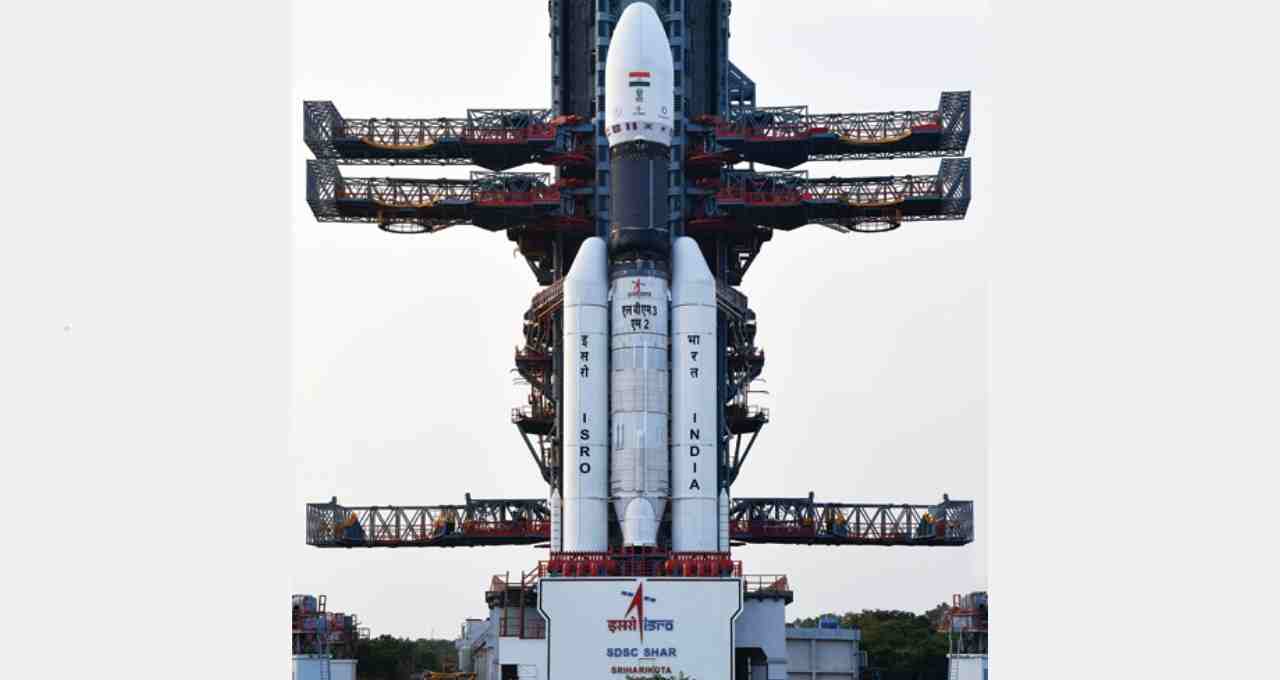
The Geosynchronous Satellite Launch Vehicle (GSLV) is a class of expendable launch vehicles operated by the Indian Space Research Organisation (ISRO).
GSLV is used to launch satellites into geosynchronous transfer orbit (GTO), which is an elliptical orbit with an apogee (highest point) of 35,786 kilometers (22,236 miles). At this altitude, a satellite can orbit the Earth at the same rate as the Earth rotates, making it appear to be stationary over a fixed point on the Earth’s surface.
GSLV was first launched in 2001, and it has since been used to launch a number of successful missions, including the GSAT series of communications satellites, the INSAT series of weather satellites, and the IRNSS series of navigation satellites.
GSLV is a three-stage launch vehicle. The first stage is powered by four solid rocket boosters and a liquid rocket engine. The second stage is powered by a liquid rocket engine. The third stage is powered by a cryogenic engine, which uses liquid oxygen and liquid hydrogen as fuel.
The GSLV Mk-III is the latest iteration of the GSLV launch vehicle. It is a more powerful vehicle than the GSLV Mk-II, and it is capable of launching heavier satellites into GTO. The GSLV Mk-III was first launched in 2017, and it has since been used to launch the GSAT-11 and GSAT-29 communications satellites.
Applications of GSLV
GSLV is used to launch a variety of satellites into GTO, including:
- Communications satellites: Communications satellites are used to provide telecommunications services, such as television broadcasting, radio broadcasting, and internet access.
- Weather satellites: Weather satellites are used to monitor the weather and to provide early warnings of severe weather events.
- Navigation satellites: Navigation satellites are used to provide global positioning system (GPS) services, which can be used to determine the location of people and objects.
- Earth observation satellites: Earth observation satellites are used to monitor the Earth’s environment and to provide data for scientific research.
Benefits of Using GSLV
There are a number of benefits to using GSLV to launch satellites into GTO, including:
- Cost-effectiveness: GSLV is a relatively cost-effective launch vehicle.
- Reliability: GSLV has a good track record of reliability.
- Flexibility: GSLV can launch a variety of satellites into GTO, including communications satellites, weather satellites, navigation satellites, and Earth observation satellites.
- Independence: GSLV is an indigenous Indian launch vehicle. This means that India does not have to rely on other countries to launch its satellites.
Challenges of Using GSLV
There are also a few challenges to using GSLV, including:
- Complexity: GSLV is a complex launch vehicle. This means that it is expensive to develop and maintain.
- Performance: GSLV is not as powerful as some other launch vehicles, such as the Ariane 5 and the Delta IV Heavy. This means that it cannot launch as heavy satellites into GTO.
- Schedule: GSLV has experienced some delays in the past. This is due to a number of factors, including technical challenges and budget constraints.
Conclusion
GSLV is a reliable and cost-effective launch vehicle that can be used to launch a variety of satellites into GTO. It is an important tool for India’s space program, and it has played a significant role in the development of India’s telecommunications, weather, navigation, and Earth observation capabilities.
